

Conversations once defined Human Resources.
Face-to-face interviews.
Manual evaluations.
Instinct-based decisions.
Today, something deeper is unfolding.
Systems are listening.
Patterns are being tracked.
Decisions are becoming smarter.
The workplace has entered a phase in which empathy and analytics work together. And understanding this shift is no longer optional.
It is essential.
When Systems Start Listening captures this transition with clarity, warmth, and practical insight.
A Changing Landscape of Human Resources
The post-pandemic workplace accelerated digital transformation across industries. HR was no exception.
Hiring became virtual.
Onboarding became structured through platforms.
Performance became measurable through dashboards.
Engagement became trackable through analytics tools.
Organisations now expect HR professionals to combine emotional intelligence with technological awareness.
The question is not whether AI is part of HR.
The question is whether professionals are prepared to work alongside it.
Dimension One: The Evolution of Recruitment
Today, most resumes are screened before a human ever sees them.
AI systems scan keywords.
Match skills with job descriptions.
Rank candidates based on compatibility.
Interview platforms analyse communication patterns and structured responses.
This does not remove human judgment.
It enhances efficiency and reduces bias.
For students and early HR professionals, understanding how these systems function builds immediate workplace confidence.
Dimension Two: Data-Driven People Decisions
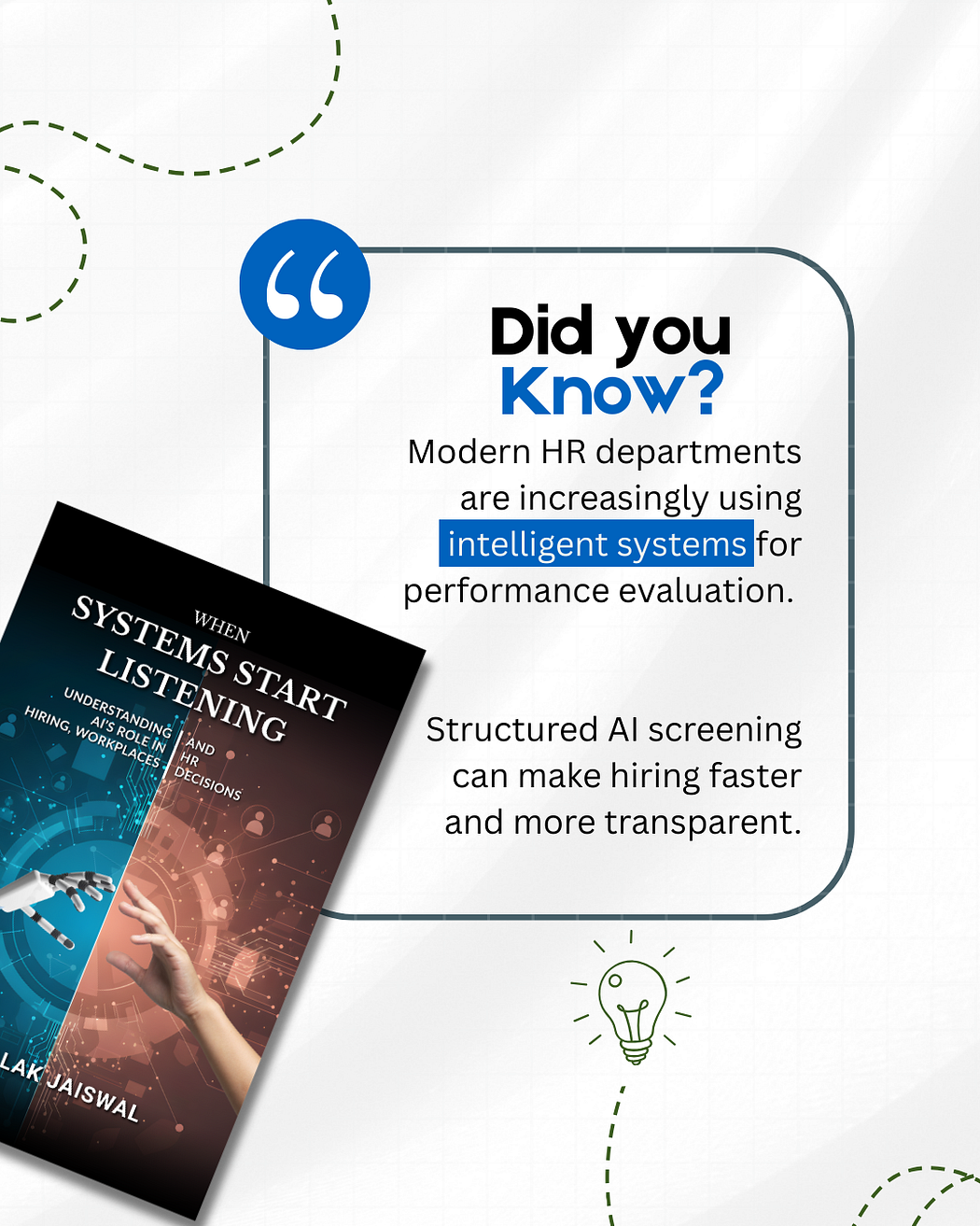
Modern HR relies heavily on insights drawn from data.
Employee engagement surveys reveal patterns.
Performance dashboards highlight productivity trends.
Learning systems recommend personalised development paths.
AI helps identify burnout signals and workforce gaps.
However, numbers alone do not tell the full story.
A skilled HR professional must interpret data while remaining sensitive to context and human emotion.
That balance defines next-generation leadership.
Dimension Three: Emotional Intelligence in a Digital Era
Technology can measure engagement.
But it cannot build trust.
AI can flag performance dips.
But it cannot hold a compassionate conversation.
The future of HR belongs to professionals who can:
Understand dashboards without losing empathy.
Use analytics without ignoring intuition.
Balance automation with human warmth.
This book emphasises that AI is a support system, not a replacement for humanity.
When used thoughtfully, it strengthens people’s practices rather than weakening them.
Dimension Four: Preparing the Next Generation
Many students graduate with theoretical knowledge of HR functions.
Yet when they enter the workplace, they encounter AI-enabled platforms and digital systems that feel unfamiliar.
Questions arise:
How do I interpret hiring metrics?
How do I understand engagement scores?
How do I combine analytics with people skills?
When Systems Start Listening answers these questions in a beginner-friendly and structured way.
It bridges classroom learning with real industry expectations.
Confidence grows when clarity replaces uncertainty.
How These Dimensions Work Together
Each dimension strengthens a different layer of professional readiness.
Understanding transformation builds awareness.
Learning system functionality builds competence.
Balancing empathy with data builds maturity.
Preparing early builds confidence.
Together, they shape a future-ready HR professional.
This integration creates harmony between technology and humanity.
The Human Voice Behind the Insight
Dr Palak Jaiswal and Prof. Lata Sharma bring academic depth and practical exposure together.
Their experience guiding students and observing workplace evolution gives the book a grounded tone.
It does not exaggerate AI.
It does not create fear.
It creates understanding.
That clarity makes the content approachable and trustworthy.
Why This Framework Feels Relevant
The strength of this approach lies in its simplicity.
It acknowledges that AI is already embedded in HR systems.
It prepares readers to adapt rather than resist.
It promotes small, steady learning that blends naturally into professional growth.
This is not about becoming a technical expert overnight.
It is about becoming aware, adaptable, and informed.
A Final Reflection
HR has always been about listening to people.
Now systems are listening as well.
The future belongs to those who can interpret both.
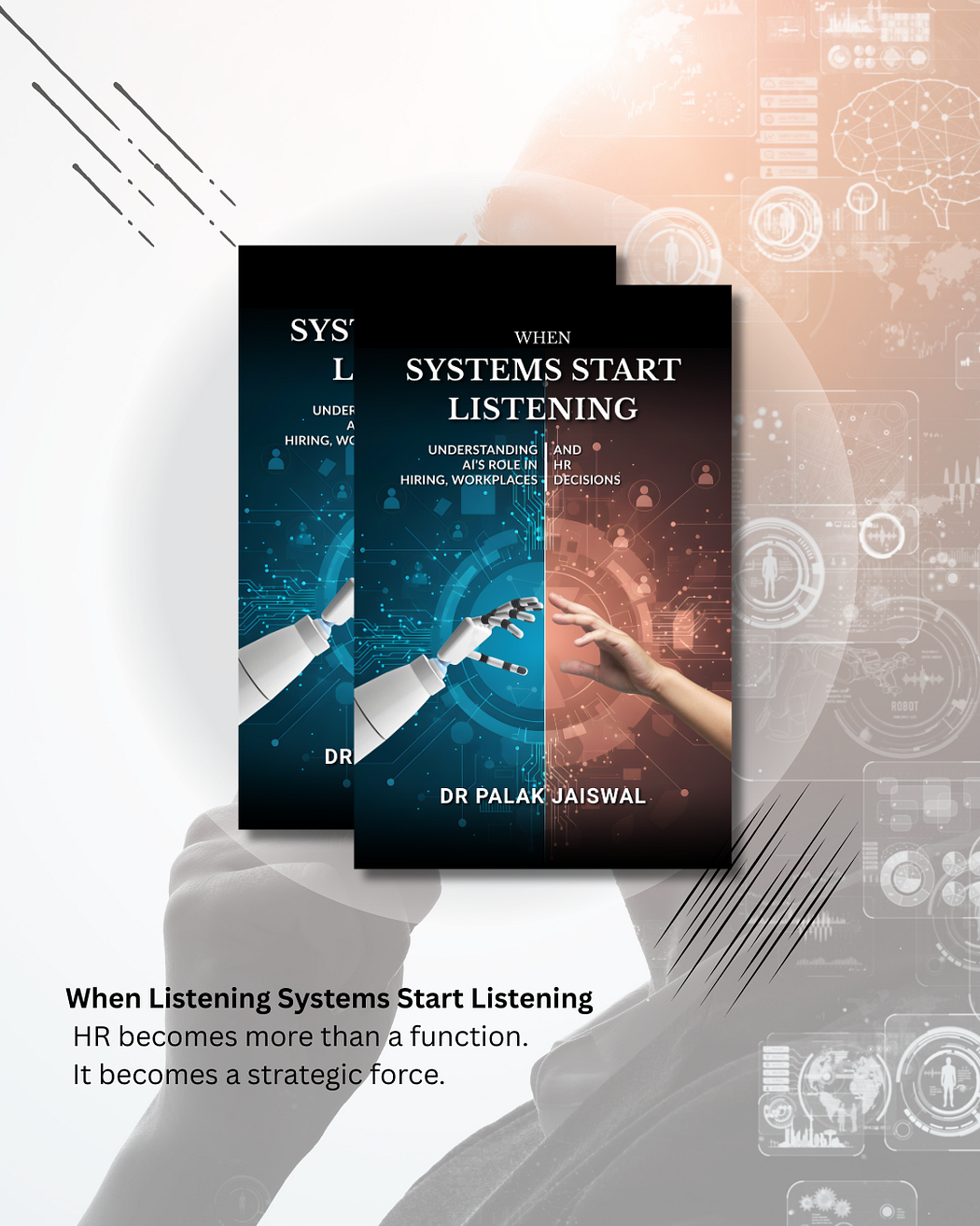
If you are preparing for placements, stepping into HR for the first time, or adapting to evolving workplace systems, this book offers a practical roadmap.
The workplace has changed.
The tools have changed.
But the core remains the same.
Human understanding, strengthened by intelligent systems.
When Systems Start Listening invites you to step confidently into that future.
And perhaps to start listening a little differently.


