
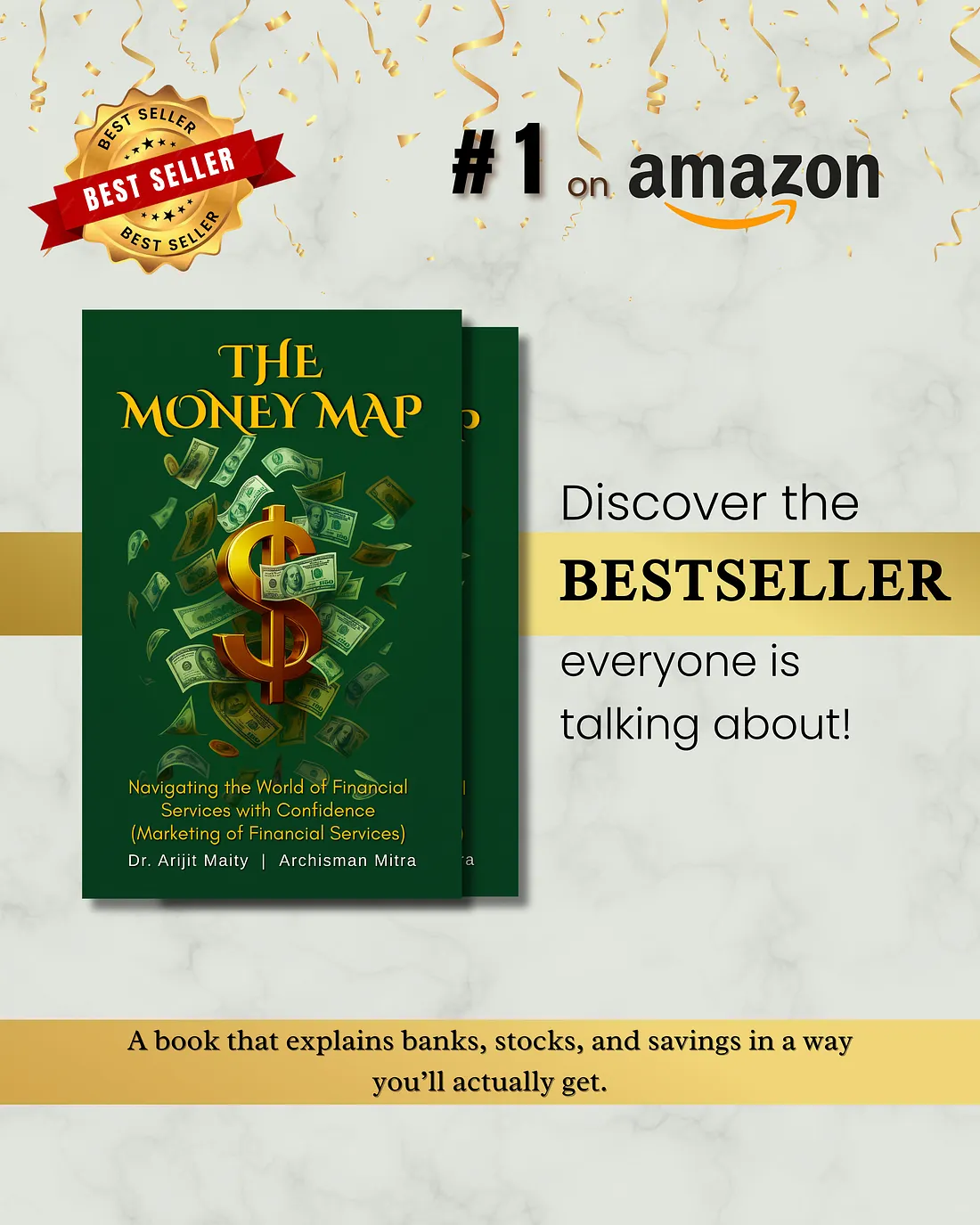
The Money Map wants to be more than a financial advice book. It wants to inspire. It wants to guide. It wants to promise hope. But somewhere in that ambition, it ends up saying things we’ve heard a hundred times before, only this time, wrapped in a few personal anecdotes and motivational punchlines.
The authors, Dr. Arijit Maity and Archisman Mitra, claim to offer a map, a framework to achieve success. But here’s the real question: Is this map useful?
The Core Premise: Be Curious, Be Focused, Be Consistent
Yes. That’s the big three.
The book attempts to dissect success into qualities like curiosity, focus, and consistency. Fair enough, we all need these. But here’s where it slips: the book doesn’t always differentiate between common sense and deep insight. It tells you that people succeed because they keep going. Because they’re intentional. Because they don’t give up. That’s not wrong, but it’s hardly revolutionary.
Pushing Passion Over Planning
One of the emphases is on dreams and vision. There’s a strong push toward believing in yourself, creating your own “map,” and tuning out societal noise.
But here’s where it gets confusing: While the message sounds nice, it becomes risky. It makes it look too easy to escape the daily grind, even though it’s extremely hard for people who don’t have money, support, or the right connections.
Not everyone can drop what they’re doing and go “chase passion.” Not everyone can risk it all. The book’s tone sometimes ignores this, as if belief alone is enough to build empires. That’s a dangerous oversell.
The Anecdotes Feel… Too Safe
Yes, there are stories. A 23-year-old who made it. A government employee who became an investor. A guy who moved from zero to a millionaire. But these stories often feel too polished, like we’re being given the filtered version, not the full mess. They’re inspiring, but they don’t leave room for failure, detours, or the dark days most people actually go through.
What’s missing is the middle part, where you doubt yourself, lose momentum, go broke, or feel like giving up. Touches on obstacles, sure, but always from a distance, with a resolution already in sight.
What The Book Does Get Right
The strongest parts are its reflections on the internal mindset. It reminds us that clarity matters. That consistency is more valuable than instant success. Managing time and distractions is crucial in a noisy world.
There’s a good argument made for long-term thinking, goal alignment, and avoiding the trap of chasing too many things at once. For a younger reader, say, a college student or early professional, this could actually be quite helpful.
What It Leaves Out
The book hardly talks about real money, like actual budgeting, saving, investing, or debt. For something called The Money Map, there’s surprisingly little about money itself. The title feels more like a metaphor than a promise, and that’s where some readers might feel misled.
If you’re looking for a financial strategy, this isn’t your book. If you’re looking for mental re-alignment and a few motivational nudges, it might hit the mark.
A Good Notebook, Not a Map
The Money Map isn’t a bad read. It’s clean, emotionally engaging in parts, and well-structured. But it rides the wave of every other self-help book that puts belief above blueprint. It promises a map but gives a compass. Whether that’s enough depends on how lost you already are.
If you’re someone who’s been through a dozen such books, you’ll likely find this familiar, maybe too familiar.


